Tensions Soar as Israeli Airstrike Reportedly Injures Iranian President Pezeshkian in Tehran
 Daily Updates News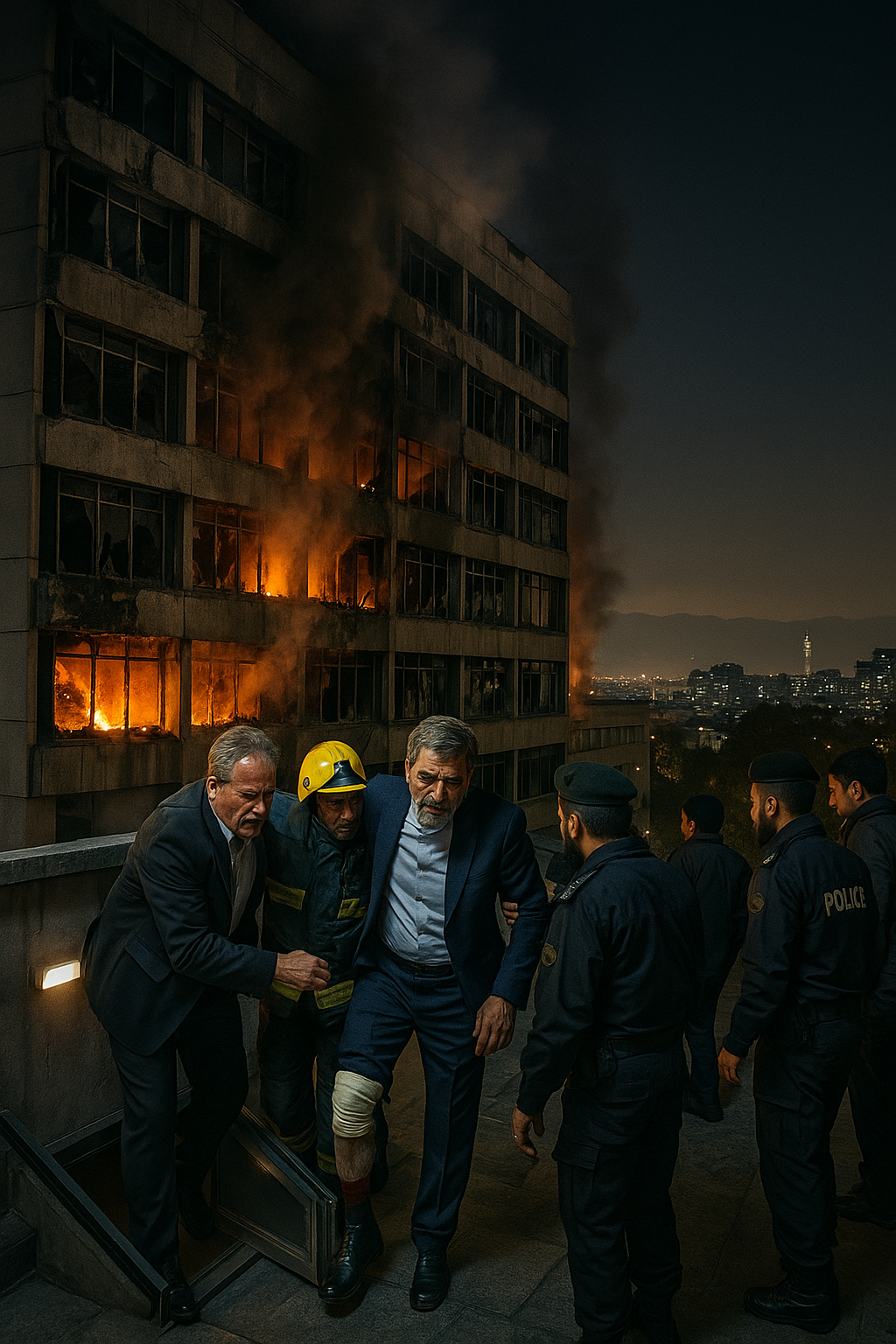
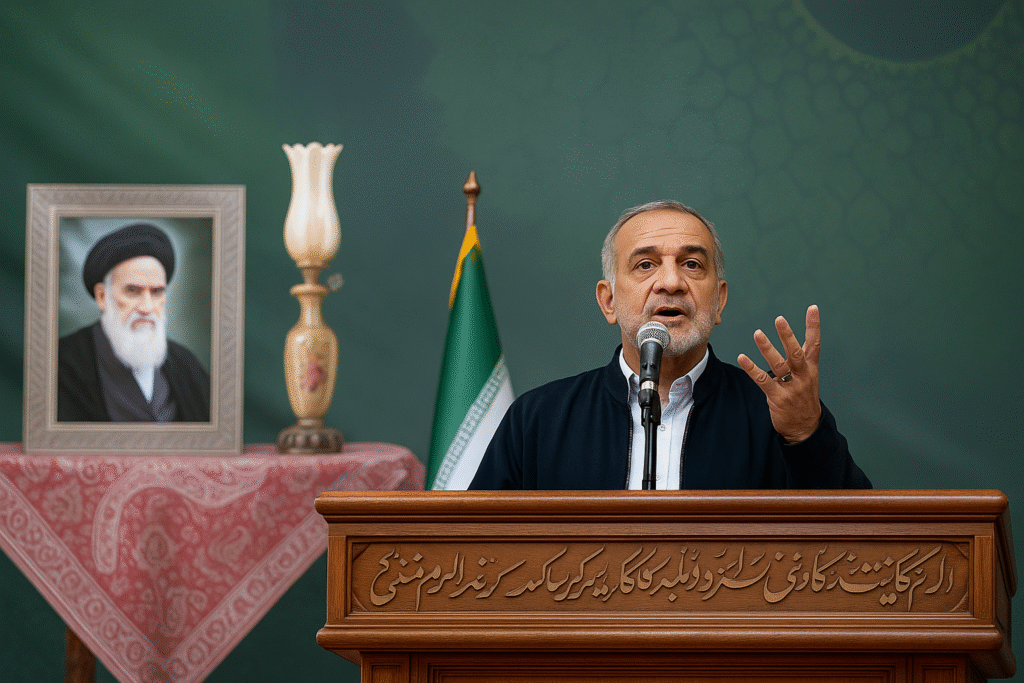
Iranian President Masoud Pezeshkian escapes through an emergency hatch with other officials after an Israeli airstrike on a Supreme National Security Council meeting in western Tehran.
Tensions Soar as Israeli Airstrike Reportedly Injures Iranian President Pezeshkian in Tehran
In a dramatic escalation of tensions in the Middle East, a recent report from Iran claims that President Masoud Pezeshkian sustained injuries during an Israeli airstrike on a high-level government meeting in Tehran. The incident, which allegedly took place on June 16, targeted a building in western Iran where Iran’s Supreme National Security Council was convened.
The details emerged through Iran’s Fars News Agency, an outlet closely aligned with the country’s Islamic Revolutionary Guard Corps (IRGC). The report suggests that the lower floors of the targeted government building were struck by multiple missiles or bombs, as Israel intensified its air campaign aimed at Iran’s nuclear and ballistic missile infrastructure.
According to Iranian media, President Pezeshkian was injured in the leg while attempting to evacuate the building alongside other top officials, including Parliament Speaker Mohammad Bagher Ghalibaf and Judiciary chief Gholam-Hossein Mohseni-Eje’i. The attack reportedly disabled the building’s power and sealed its access points, forcing the officials to escape through an emergency hatch.
Though Iranian authorities have yet to confirm the exact location of the strike, reports have pointed to an area near Shahrak-e Gharb in western Tehran. The incident has reignited concerns about regional security and the possibility of a wider conflict between the two long-time adversaries.
Claims of an Assassination Attempt
In an interview with American political commentator Tucker Carlson last week, President Pezeshkian accused Israel of attempting to assassinate him. He claimed that Israeli intelligence, allegedly aided by insiders, pinpointed the meeting location and orchestrated the attack to target Iran’s top leadership. Pezeshkian stated, “Thanks to the spies they had, they tried to bombard the area where we were holding the meeting.”
These claims have raised questions within Iran’s security establishment, prompting investigations into whether Israeli intelligence had inside information about the sensitive gathering. Although the attack resulted in minor injuries to several attendees, including Pezeshkian, official Iranian sources have presented conflicting accounts. IRGC General Mohsen Rezaei later told state media that none of the council members were harmed.
Context of the Air Campaign
This reported strike came amidst a larger Israeli military operation against Iran, which began just four days earlier. The operation targeted key Iranian military and nuclear facilities in an attempt to disrupt Tehran’s advancing missile and nuclear programs. Israel has long accused Iran of pursuing nuclear weapons capabilities, though Iran maintains its nuclear program is for peaceful purposes.
The broader campaign reportedly claimed the lives of several high-ranking Iranian military officials, including Islamic Revolutionary Guard Corps chief Gen. Hossein Salami and the head of the Guard’s ballistic missile division, Gen. Amir Ali Hajizadeh. Additionally, Mohammad Bagheri, a major general in Iran’s armed forces, was also said to have been killed.
Despite these significant military losses, Israel clarified that it was not pursuing regime change in Iran. Israeli Defense Minister Israel Katz stated, “This is about halting an imminent threat, not overthrowing a government.”
International Involvement and Ceasefire
The situation escalated further when the United States joined the offensive on June 22, striking multiple Iranian nuclear facilities at Natanz, Fordo, and Isfahan. However, the hostilities were short-lived. A ceasefire brokered by the US brought the conflict to a halt within days, with both sides sustaining significant damage.
Former US President Donald Trump later claimed that American and Israeli forces deliberately avoided targeting Iran’s Supreme Leader, Ayatollah Ali Khamenei. Israel cited uncertainty over Khamenei’s location, reportedly hiding in an underground facility, as the reason he was not targeted.
Ongoing Tensions and Retaliation
In response to Israel’s aggressive campaign, Iran launched a barrage of over 500 ballistic missiles and roughly 1,100 drones at Israel. The retaliation caused considerable casualties and damage within Israeli territories, resulting in 28 deaths and over 3,000 injuries, according to official reports.
Despite temporary calm following the ceasefire, tensions between Israel and Iran remain high. With both nations accusing each other of covert operations and proxy warfare, the risk of renewed conflict continues to cast a shadow over regional stability.
Conclusion
While the full details of the alleged Israeli airstrike on Iran’s Supreme National Security Council meeting remain unconfirmed, the incident underscores the fragile state of affairs in the Middle East. As both nations trade accusations and retaliatory actions, the international community watches closely, aware that further escalation could have serious global repercussions.