Russia and North Korea Strengthen Military and Diplomatic Ties Amid Ukraine Conflict
 Daily Updates News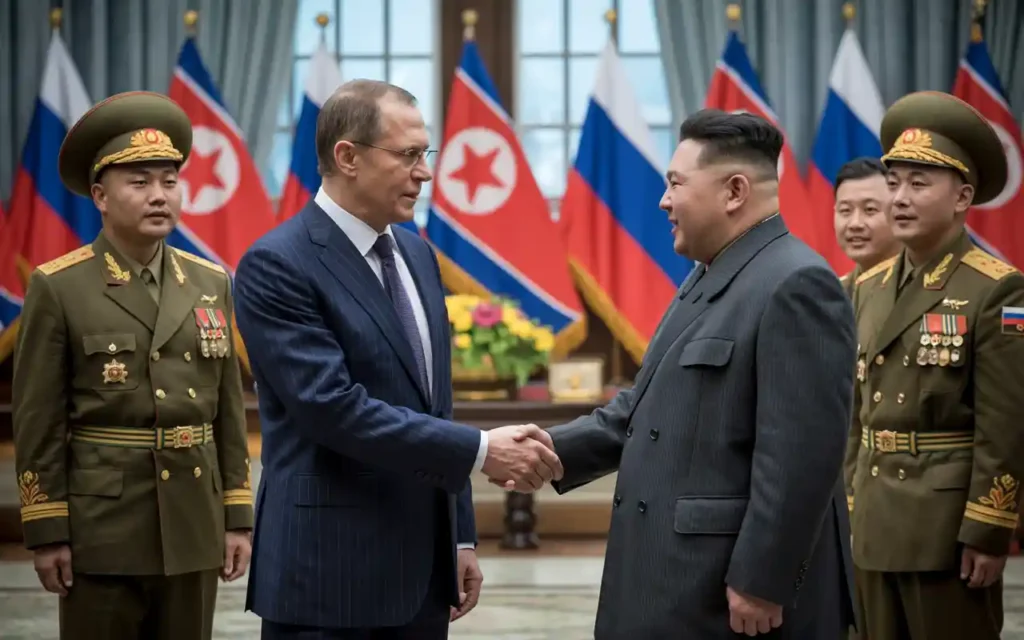
Russian Foreign Minister Sergei Lavrov and North Korean leader Kim Jong Un hold a formal meeting in Wonsan, reinforcing their military alliance and diplomatic ties.
In a significant development that highlights growing cooperation between Russia and North Korea, Russian Foreign Minister Sergei Lavrov met North Korean leader Kim Jong Un in the coastal city of Wonsan on Saturday. The visit marks another step in strengthening diplomatic and military ties between the two countries, with Lavrov describing their relationship as an “invincible fighting brotherhood.”
This high-level meeting was part of a series of strategic dialogues initiated following Russian President Vladimir Putin’s visit to North Korea last year. According to reports from Russia’s foreign ministry, Lavrov conveyed a message from Putin expressing hope for even deeper relations and more frequent direct contact between the two nations in the near future.
Military Cooperation and the Ukraine War
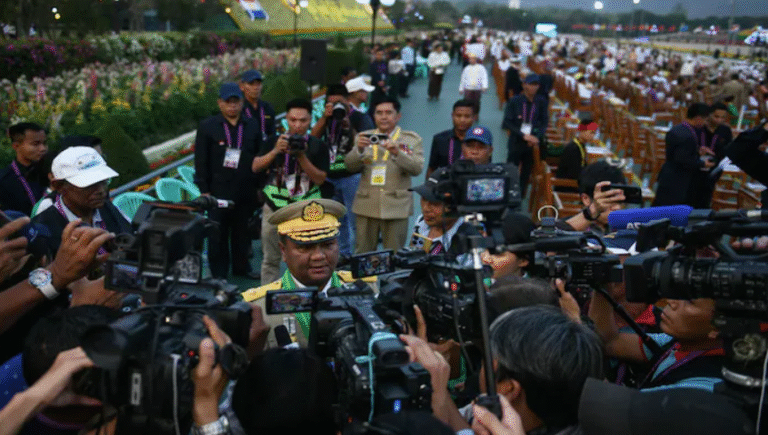
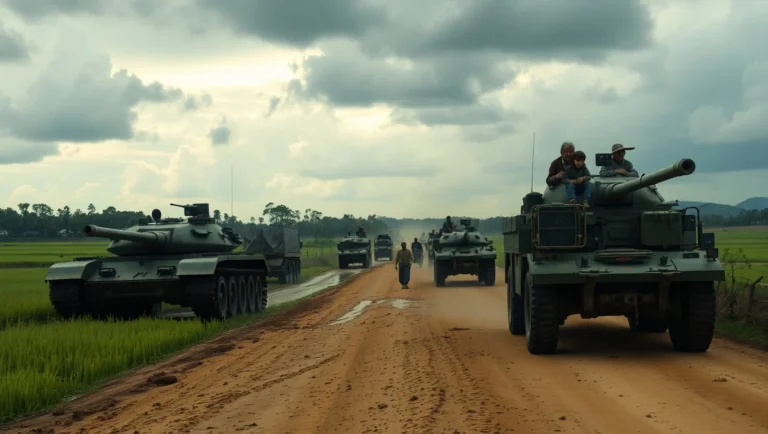
The bond between Moscow and Pyongyang has notably deepened since the escalation of the conflict in Ukraine. North Korea has not only expressed firm political support for Russia’s military actions but has also provided tangible assistance. Thousands of North Korean soldiers have reportedly been deployed alongside Russian forces, particularly in the conflict-ridden Kursk region, where intense fighting against Ukrainian troops has been ongoing for months.
Recent intelligence reports from South Korea suggest that North Korea could be preparing to send additional troops to Ukraine in the coming months. In addition to combat forces, Pyongyang has agreed to dispatch around 6,000 military engineers and construction workers to help rebuild damaged infrastructure in the Kursk region, an area heavily affected by Ukrainian military operations over the past year.
Lavrov confirmed these reports during his meetings, stating that North Korean officials had once again expressed unwavering support for Russia’s military objectives in Ukraine. This aligns with the broader strategic partnership both nations have been building, which now includes a mutual defense pact, symbolizing a significant escalation in their alliance.
Growing Diplomatic Engagement
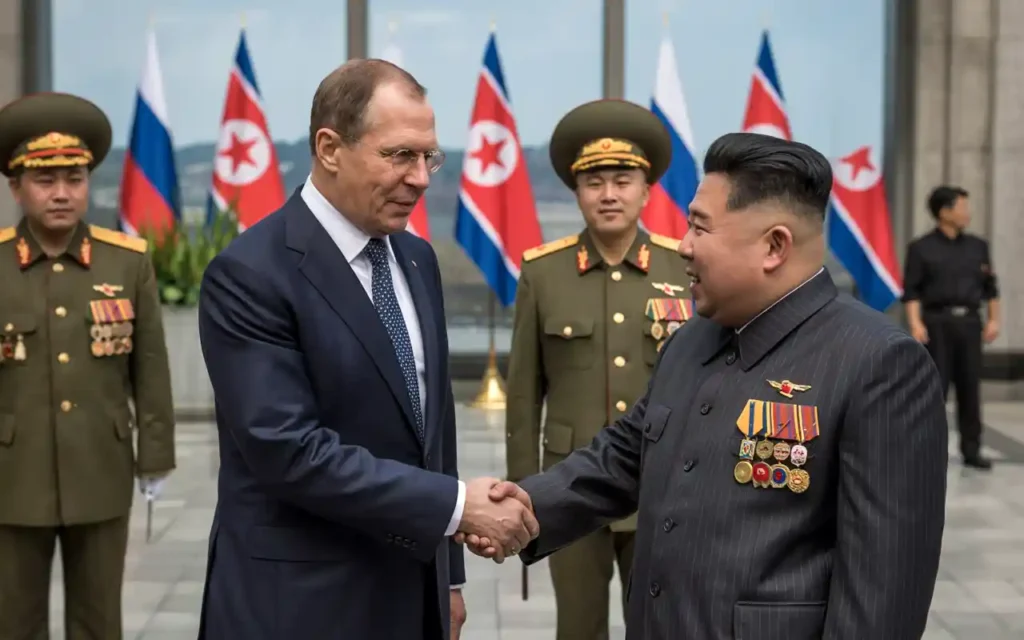
During his visit, Lavrov also held discussions with his North Korean counterpart, Choe Son Hui. Both leaders reviewed ongoing military and political developments in the region and reaffirmed their commitment to enhancing strategic cooperation. Russian state media agency TASS quoted Deputy Foreign Minister Andrei Rudenko as saying that additional high-level delegations from Russia are expected to visit North Korea later this year, further solidifying this growing partnership.
Lavrov’s stop in Wonsan followed his attendance at the ASEAN foreign ministers’ meeting in Kuala Lumpur, Malaysia. Wonsan, a city known both for its missile and naval facilities and its newly developed seaside resort, has become a symbolic location for high-stakes diplomatic meetings between Moscow and Pyongyang.
Interestingly, TASS also reported that the new Wonsan coastal resort could potentially boost Russian tourism to North Korea, with plans to resume direct train services from Moscow to Pyongyang. Furthermore, there is a proposed infrastructure project to build a bridge across the Tumen River, which forms a boundary between Russia, North Korea, and China, aimed at facilitating smoother transport and trade routes.
International Reactions and Future Prospects
The growing military and diplomatic partnership between Russia and North Korea has raised concerns among Western nations and international observers. The possibility of North Korea sending more troops and resources to assist Russia in Ukraine could further complicate the already tense geopolitical situation.
Meanwhile, Lavrov is scheduled to travel to China after concluding his North Korea visit, where he will attend the Shanghai Cooperation Organisation (SCO) meeting. This indicates Russia’s intent to maintain strong ties with Asian allies as it faces increasing isolation from the West due to its actions in Ukraine.
For North Korea, these diplomatic overtures not only provide much-needed economic and military support but also reaffirm its position as a key player in regional politics. Kim Jong Un’s government continues to leverage its strategic importance to negotiate defense and infrastructure agreements with Moscow, ensuring mutual benefits as both nations seek to challenge Western influence in global affairs.
As this alliance continues to evolve, it remains to be seen how it will impact the balance of power in East Asia and the ongoing conflict in Ukraine. One thing is certain — the strengthening of ties between Russia and North Korea marks a new chapter in international relations, one that will be closely monitored by governments and analysts worldwide.