Trump Confirms Renewed US Military Support to Ukraine Amid Escalating Russian Attacks
 Daily Updates News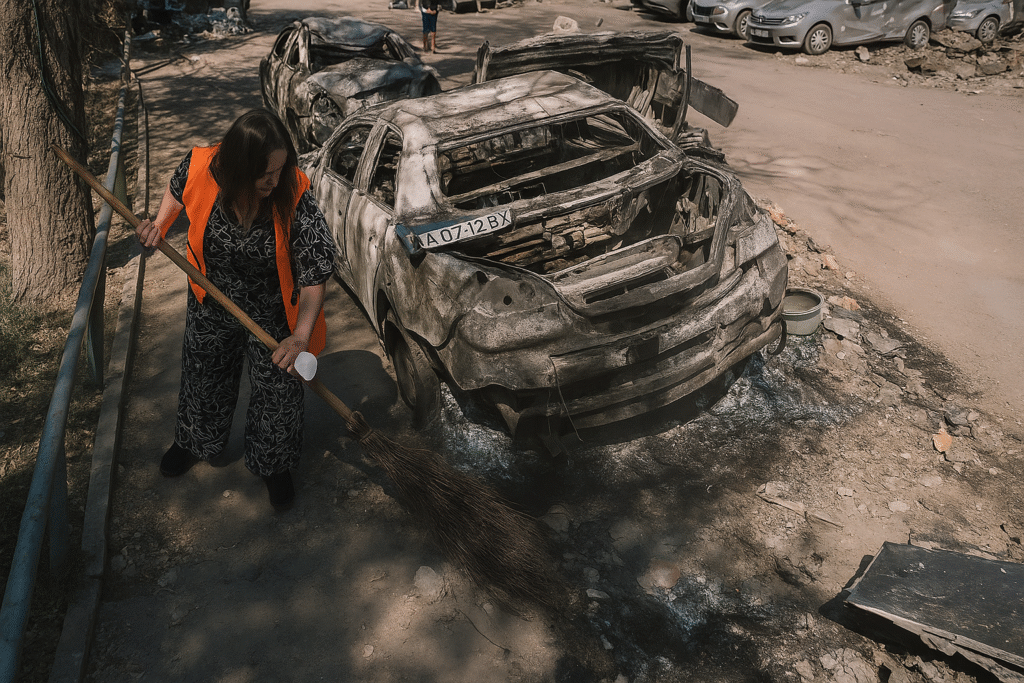
A Ukrainian woman clears rubble next to destroyed vehicles in a residential area heavily damaged by recent missile attacks, as residents attempt to restore some normalcy amid ongoing conflict.
In a significant development for Ukraine’s ongoing defense efforts, former US President Donald Trump has confirmed that the United States will resume military aid to Kyiv after a temporary suspension of weapons shipments last week. This announcement follows days of intensified Russian missile and drone strikes targeting Ukrainian cities, with the capital Kyiv experiencing some of the heaviest bombardments since the war began.
During a press briefing held alongside Israeli Prime Minister Benjamin Netanyahu, Trump expressed deep concern over the recent escalation in hostilities, emphasizing that Ukraine is “getting hit very hard” and highlighting the need for defensive support.
“I’m disappointed that President Putin has not stopped,” Trump remarked, referencing the continued aggression from the Kremlin despite international condemnation and ongoing diplomatic efforts to bring the conflict to an end. He added, “We’re going to send some more weapons. We have to… they’re taking a lot of hits now.”
Background on the Pause in Military Aid
Last week, the White House announced a decision to temporarily halt shipments of certain critical defense systems, including Patriot air defense missiles and precision-guided artillery shells. Officials cited a routine review by the Department of Defense intended to ensure America’s strategic interests and military readiness were not compromised.
However, the move triggered immediate concern in Kyiv, with Ukrainian President Volodymyr Zelensky warning that the suspension could jeopardize his country’s ability to defend against increasingly frequent Russian airstrikes and ground assaults along the frontlines.
Zelensky described the US Patriot systems as “real protectors of life” and made urgent appeals for continued support from Washington and other international allies.
Rising Tensions and Renewed Commitments
In the days following the announcement, Russian forces unleashed a series of devastating attacks across Ukraine. According to Ukrainian officials, a recent barrage in Kyiv alone claimed several lives, with additional strikes targeting Sumy, Kharkiv, Dnipropetrovsk, and Chernihiv.
Amid growing pressure from both Ukrainian leaders and international observers, Trump’s administration reversed its earlier position, committing to dispatch additional defensive weaponry to bolster Ukraine’s defenses.
The Pentagon released a statement confirming the renewed support:
“At President Trump’s direction, the Department of Defense is sending additional defensive weapons to Ukraine to ensure the Ukrainians can defend themselves while we work toward securing a lasting peace and ensuring the killing stops.”
Ongoing Diplomatic Stalemate
Despite multiple attempts at ceasefire negotiations over the past year, progress has remained elusive. Trump acknowledged the difficulty in reaching a resolution during a recent conversation with Russian President Vladimir Putin, stating candidly that “no progress” had been made and suggesting that Putin “is not looking to stop.”
In response to the sustained aggression, President Zelensky has urged the international community to ramp up pressure on Moscow through harsher economic sanctions and increased military support. He confirmed that he had spoken to Trump about Ukraine’s urgent air defense needs and agreed to work together on strengthening protection for Ukrainian airspace.
A War Entering Its Fourth Year
Russia’s full-scale invasion of Ukraine began in February 2022 and has since evolved into one of Europe’s most devastating conflicts in recent history. With civilian casualties mounting and infrastructure heavily damaged, the humanitarian toll continues to rise. As the conflict now stretches into its fourth year, both military and diplomatic pathways to peace remain fraught with complexity.
For Ukraine, continued international support — particularly from the United States — is seen as essential in maintaining defensive capabilities and deterring further aggression.
While the latest US pledge of additional defensive aid offers a moment of reassurance for Kyiv, the broader geopolitical tensions fueling this conflict show little sign of abating.